Chapter 6: Why
Why? Why all of this?
Well, like it or not, Stranger Things was a cultural phenomenon and a staple of pop culture for a reason. It’s emblematic of a lot of things— in television, the shift from longer seasons with mandated formats to the Netflix miniseries model that has made and killed a lot of shows in the meantime; the endless forward shuffle of capitalism and its spaghettification of mainstream art; the shift from joyful and sincere celebration of throwback media to a grotesque, childish perceived culture of manchildren clinging to the past; the changing values of the times in its own inability to reflect it. I’d like to point out again that criticisms of the show have been present from the beginning: criticisms of its misogyny, its racism (both in-show and out; Caleb McLaughlin has spoken about the bigotry he’s faced from fans since he was a child1Shanfeld, Ethan. “‘Stranger Things’ Star Caleb McLaughlin Opens up about Racism from Fans: "It Definitely Took a Toll on Me".” Variety. ). It’s the wider air of scorn and reversal of mainstream acceptance that has changed, and anyone’s faith that the show could be used to meaningfully address any of these topics— but at one point, it could have, which is what makes it distinct from a lot of other abandoned media for me.
At its core, there has always been potential in Stranger Things. It even executes on some of it.
Will’s storyline ends up being a trash fire, but his starting conceit— a closeted gay kid in the 80s whose
disappearance goes uninvestigated partially due to his family’s ostracized status— is not a bad one. People
in 2016 were drawing comparisons between the Upside Down and the various ills of small-town USAmerica, its
insidious murder of vulnerable people on the fringes; some even directly reframed it as a metaphor for the
effects of racism2Wu, May. “Why Stranger Things Is a Metaphor for Racism.” Medium.
. The show has had its ups and downs in portraying queerness, but it gained that following
for a reason, not just because of Will and Robin but also gender-nonconforming (relatively speaking) female
characters like Barb, Jane, and Max— androgynous, butch-adjacent girls who were open outliers in both
appearance and behavior3binarythis. “The Queer World of Stranger Things.” BINARYTHIS
. While the show doesn’t execute on that angle nearly as well as its subplots about
sexuality, it presents these facets matter-of-factly and, at least at first, did not force the characters to
capitulate to outside judgment or standards regarding femininity4
A lot could be said about how the show handles Max and Jane’s relationship with one another in
comparison to the male characters, as well as their journeys of gender expression and how they
become intertwined with one another. Jane begins the show completely cut off from societal
expectation and knowledge of social norms. She lacks all obvious gender markers, prepubescent
and with a shaved head, to the point where she is mistaken for a boy by multiple witnesses; as
mentioned, her first venture into overt feminine expression is in the context of disguising
herself, and after her confrontation with the boys’ main bully, she loses the blonde wig but
keeps the dress. In season 2 her hair has grown out, and as she strives for her own independence
she experiments with finding her own sense of expression, getting a punk makeover by her sister
Kali in episode 7, “The Lost Sister”. Jane rarely gets the opportunity to directly interface
with other female characters who aren’t related to her in some way, i.e. her sister and mother;
most of her arcs surround at least one male figure in a high capacity, whether as a father
figure (Hopper, Dr. Brenner) or as a love interest (Mike).
Max is introduced in season 2 as the mysterious new kid beating the boys’ scores at the arcade—
Mad Max— and becomes their immediate subject of fascination and infatuation, but she rebuffs
them until she’s gotten truly endeared to the group. She is solitary, independent, and
foul-mouthed; she consistently sports an androgynous clothing style and dresses up as Michael
Myers for Halloween (scaring the shit out of the boys in the process); while searching the
school for a larval Demogorgon, she enters the boys’ locker room without a second thought; she
is shown nearly exclusively playing video games and skateboarding, often outperforming her male
peers. She carries an immense amount of pain and terror from her home life, with her resentful
stepbrother Billy acting as her only present guardian, and largely keeps it to herself under a
tough, aloof guise for fear that his interference will cause harm to those she gets close to.
Her relationships with the other male characters are also nearly exclusively defined by romantic
overtures, with Dustin and Lucas attempting to compete for her heart throughout the entirety of
season 2.
At first, Jane and Max are juxtaposed in yet another love triangle, this time between themselves
and Mike despite the fact that Mike is actively hostile towards Max’s presence. By the time
season 3 rolls around, Max and Lucas / Jane and Mike have gotten together respectively. Jane and
Max, without any narrative push to see each other as rivals, instead become co-conspirators—
girl friends, if you will. Max becomes Jane’s confidant about her and Mike’s strained
relationship, her main emotional support and source of advice. They have the aforementioned
sequence in episode 3 (“Mall Rats”) where they undergo a shopping spree set to Madonna’s
“Material Girl”; a gross expression of unbridled consumerist excess for sure, but also one of
the only times in the show where two unrelated girls of the same age openly laugh, smile, and
hold each other. Max embraces Jane as their photos taken in couple-like poses, laughing in the
face of the snobbish girls who look at them strangely, and Jane uses her powers to make the
latter’s smoothies harmlessly explode— one of the only times she uses her powers not only for
her own amusement, but to make Max laugh. (Compare to Elfen Lied’s Lucy and Aiko
Takada, two girls with tormented relationships with their father figures and hold a
trauma-bonded, homoerotically charged dynamic with each other, who have a scene in a shopping
mall where the former uses her usually-deadly powers to entertain the latter. This is a parallel
the show certainly did not intentionally draw, but holds interesting similarities
regardless.)
.
If the show was smart, it would have actually been about all this, but the Duffers’ aims are turned solely inwards. I can’t speak for their personal politics, but solely based on the narrative’s portrayal, the Duffers only seem to care about outcasts in the capacity that they, and the characters from their idolized movies, are outcast-coded— nerds, geeks, people who play D&D in their parents’ basements; interchangeable with any other marginalization, surely. The kids had to be freaks because Stephen King characters are freaks. Set-dressing to make the throwback more authentic. They don’t even have the strength to go all the way for their villains: the omnipresent maliciousness of the government, the incompetent police force, Billy’s violent racism and misogyny are all presented then immediately downplayed. The only thing it goes full force on is its commie Russia fixation, because in its mind, communists are just another Saturday morning cartoon villain that can be as easily used as shorthand for “bad guy” as zombies or Nazis or zombie Nazis.
What Strangethings seems to miss about nearly all its inspirations is that usually the horrors and the monstrosities mean something. Pennywise is basically Vecna but good (well, better. I have issues with Stephen King’s IT that could be a mini-essay in of itself). These tropes are so obvious that they’ve already been done to an extent by Strangethings’ foundational works, but Strangethings is unable or unwilling to innovate on these ideas. The steamrolling of the show onto the pop culture scene with all the Funko Pop tie-in franchise potential expedited this rot into popcorn entertainment. If at some point there had been some motivation on part of the Duffers’ to expand more on those ideas, it was surely discouraged by the fear of fumbling their multi-billion-dollar Netflix smash hit with millions of viewers eager to watch the same thing, again, with preferably more famous songs and as little change as possible. Maybe those kinds of viewers don’t really exist in those quantities, lord knows there are a lot of people overanalyzing this show more than me and I’ve talked for 14k words about it; they are, however, the ideal target audience for a Netflix executive. This is the company that actively encourages removing nuance from shows so that more people can put them on in the background5Forlini, Emily. “Netflix Is Telling Writers to Dumb Down Shows Since Viewers Are On Their Phones.” PCMAG. , after all. Shows with actual integrity would chafe under these circumstances, and Strangethings didn’t exactly have much to lose to begin with. It’s escapist media, a genre in forever high demand, but the facets of its escapism are so of the time, so unchanging, and so ultimately shallow that it has proved utterly incapable of serving the needs of 2026-era sufferers.
We’ve now exhaustively outlined the ways in which this show is bad. The question then becomes, is there something to gain from it anyway? My underdeveloped media critic brain says no, but my much more extensively used garbage-eating ape brain says Nuance. A wise poster once said, there’s a bell curve to quality— when a show is far on the spectrum of good or bad, you can talk about it for a while, then you can move on. When a show is sufficiently mediocre? That shit stays in your mind like a malignant ergot and torments you with visions of what it could be. Paleolithic hunters saw motions in cave wall paintings, and we poor fucks see outlines of shows that could have been on our shitty cracked phone screens. We alleviate our pain through rewrites and the like, which is a form of exorcism.
More than anything, even past how to fix the broken aspects of the show, I believe we can use Strangethings to divine a lot of cultural intent and ideas of the time. Namely, the ever-sleeping serpent of nostalgia and its fat coils around USAmerican media. If there’s anything to prove that nostalgia is a moving set of goalposts that shifts at a fixed ratio to current times, people in 2026 are reminiscing about 20166Walters, Meg. “Why the 2016 Trend Is Hitting Millennials so Hard.” Glamour. (including being nostalgic specifically about the first drop of Stranger Things, coming full circle for a work itself created to mine nostalgia for the 80s) as if it wasn’t then-known as an apocalyptically bad year. 2016 has the capacity to be nostalgic simply because it isn’t right now. If you were a child during 2016 as I was, it was a time before you knew better. Maybe, like me, you were well aware of the bad stuff, but still held an air of unearned hope in your institutions dashed steadily over time. As a collective we become increasingly uninterested in our current lives, and have to walk with our backs to the present to muster the strength to keep going at all— a sad place to be, but unsurprising given how popular media like Strangethings incentivizes such fetishization of the past.
Nostalgia itself used to be known as a disease. The word derives from The Odyssey, compounded from nostos (return) and algos (pain), coined by Odysseus describing to Calypso the longing for his homeland7Sedikides, Constantine, et al. “Nostalgia: Past, Present, and Future.” Current Directions in Psychological Science, vol. 17, no. 5, 2008, pp. 304–07. . It was a medical diagnosis for debilitating, fatal homesickness in Swiss soldiers of the late 17th century8Wilson, Janelle Lynn. “Here and Now, There and Then: Nostalgia as a Time and Space Phenomenon.” Symbolic Interaction, vol. 38, no. 4, 2015, pp. 478–92. — now we use the sickness as its own kind of balm. Not only has our longing for the past increased9Routledge, Clay. “Historical Nostalgia in Modern America: Exploring Its Prevalence, Appeal, and Psychological Utility.” Archbridge Institute. , the times we long for grow closer and closer to our present, to the point that mass entertainment is eating itself. High-fidelity remakes of classic games sell big press and meaty $70-$100 price tags; Disney’s live-action remake industrial complex churns out regurgitation after regurgitation of movies from not even a decade ago. Retro theming is heavily used in advertising: deliberately old-school jingles, retro fonts, limited-release editions of old runs of current brands. This is all to evoke the warm, fuzzy feelings of seeing the markers of a happier time, entwining them with brand recognition, and eventually making it so that the latter does not exist in the mind’s forefront without the former. “Personal and communal nostalgia are closely intertwined, nowhere more so than in marketing,” write Brown et al. We see this every day in pop culture with entire communities and online followings dedicated to merchandise collection. Stranger Things’ slavish devotion to product placement has endless in-show advertisement during more and more inappropriate times; Coca-Cola prominently features while Will Byers is watching Robin kiss her girlfriend through a cracked-open hospital door. Every season it grows exponentially, there is never enough, there always has to be more. The grass on the other side of the time capsule grows only more and more green.
Nostalgia is so woven into the DNA of Strangethings that it strangles out its own curiosity; as the seasons limp on it cannot help but shovel in another 80s song, show another snippet of an 80s classic that I would much rather be watching. Consider that every one of its monsters borrows or is derived from names of preexisting D&D creatures: Demogorgon, Mind Flayer, Vecna. Trite as it is, the power of this pattern recognition has always been tangible: “Running Up That Hill”, a song released over 30 years ago at the time, reached the top of the Apple Music charts in 201910Tangcay, Jazz. “How "Stranger Things" Landed Kate Bush’s “Running up That Hill.”” Variety. and got Kate Bush nominated for multiple awards. Everybody regresses, everybody wins— it’s easier in a lot of ways to write something in an earlier era, after all. You don’t have to deal with smartphone connectivity, don’t have to write around the internet; when the social problems of the time rear their head, even the most milquetoast, liberal platitudes function as effective counters. Presenting cogent commentary about modern problems is welcome, but optional, even subliminally discouraged.
Strangethings’ 80s nostalgia pulls double duty not only in alleviating the pain of the present, but smoothing away the struggles of the past; the AIDS crisis, the crack epidemic and its effects on African-American communities11Marable, Manning. “Social and Economic Issues of the 1980s and 1990s.” Amistad Digital Resource. , the fall of the USSR, the US’ parallel interventionism in foreign affairs. Through Strangethings’ glossy lens, all that is left is the music, the movies, and the Reaganomics-era consumerism. You don’t need to know anything about the 80s to enjoy Stranger Things; in fact, you’ll probably enjoy it better if you don’t. Through this lens, its role as a piece of media becomes slightly insidious, sinister even. Hand in hand with the aforementioned marketing, nostalgia doesn’t just regurgitate history as-is to boost sales, it has an active role in shaping it: “because cultures are complex and individuals heterogeneous, heritage is often an ambivalent legacy. [...] Heritage, moreover, might need to be created and managed, as the literature on ‘invented traditions’ attests” (Brown et al). The barriers between personal and collective nostalgia begin to blur, and as has been proved time and time again, it becomes a powerful tool for shaping— and revising— collective views of history.
Stranger Things was certainly not the first piece of 80s-throwback media to come to cultural prominence at the time, but its massive success helped set the path for a particular nostalgic off-branch, informally deemed “pseudo-nostalgia” in a Conversation article by Orazi and Tom12Orazi, Davide Christian, and Tom van Laer. “It’s Not Nostalgia. Stranger Things Is Fuelling a Pseudo-Nostalgia of the 1980s.” The Conversation. — nostalgia for a consumer who wasn’t even alive for that generation, allowing them to “immerse themselves in eighties pop culture to cope with their wistful affection and sentimental longing for this period of the past” (Laer and Orazi). We see more works with pre-2000s callbacks steadily less and less relevant to their setting or plots such as Ghostbusters: Afterlife, Ready Player One, and Thor: Love and Thunder— works not just reminiscing about a time in the past, but selling an imagined, theme-park version of it. Then that experience in of itself becomes the nostalgic experience for viewers 20 years later, and they’ll cough up $100 tickets to go see Stranger Things on Ice Presented by Warner-Netflix-Universal Studios. As stated by Ekaterina Kalinina in “What Do We Talk About When We Talk About Media and Nostalgia?”:
The media are no longer simple triggers of nostalgia; rather, the media constitute the space wherein nostalgia happens and provide the tools for nostalgic creativity [...] In such environments, we actually deal with self-induced nostalgia – nostalgia that is created through the creation of the stimuli for a nostalgic atmosphere.
We know well the effects of societies driven by self-produced, artificial nostalgia. An article by Behler et al. shows a positive relationship with nostalgia and racial prejudice; it also links national nostalgia, a subsect of collective nostalgia, with increased prejudice as well as support for (in the case of the US) Trump’s populist messaging. The infamous “Make America Great Again” used throughout both terms comes to mind— though ironically, this was adopted from Ronald Reagan’s 1980 campaign, first coined “Let’s Make America Great Again”13Institution, Smithsonian. “Button, Ronald Reagan, 1980,” Smithsonian Institution. . (Good memories crystalized, inconvenient memories purged.) Generally, when right-wing parties make gestures to the “good old times”, the “golden age”, or any nebulous period of time where things were better, it’s less to indicate a literal revival of policies from any particular era (indeed, few right-wing leaders actually wish to return to the periods they idealize) and more to invoke mobilization through “juxtaposition and unfavorable comparison between an idealized past and the decaying present” (Elgenus, Rydgren). “When things were better” could refer to the 80s, could be the 60s, could be the 1800s; actual examples are moot when voters subtextually understand that what is being referred to is the loss of economic stability, a sense of ethnonationalism, homogeny, traditional values, a time when the marginalized were comfortably out of sight. Citizens become aware of their previous majority being threatened; stirred up by anti-migrant, xenophobic, misogynist, and transphobic rhetoric; and invent a past where there were never migrants or trans people or women who didn’t know their place to justify that this is only now the case. The nostalgia stirred in politics needs not gesture at events that are factually true; all it must do is invoke anger at the present and attribute its failings to loss of the imaginary past.
Nostalgic fulfillment, no matter how elaborate, is by design provisional, since unfulfillment- the addiction behind the addiction- becomes infinitely more desirable. I consume out of curiosity, boredom or envy, and it is what/how I consume that, as if by chance, consumes me by opening onto a new lack, expressed as nostalgia for a past gratuitously laid bare or gestured at. The pined-for past holds out against our desirous inroads. It is this ineluctable logic so vital to nostalgia that capitalist praxis perverts. (Chrostowska 1-2)
Naturally, the more one drifts from a clear understanding of history, the more susceptible one becomes to constructing an imaginary one in its stead. Here lies the role of media like Stranger Things, far from the originator of these issues but, to an extent, has a hand in furthering them. Visual media such as television and movies have particular sway over viewers’ perceptions and education of history. In a 2000 survey done by the American Historical Association on over one thousand Americans, over 40% of participants cited movies and TV programs among the most cited means of connecting with the past (Weinstein). Visual media, of course, is not a one-way funnel for shuttling propaganda into unwitting viewers’ heads; it has been a powerful tool to educate and inspire discussion about the exact subjects they can also propagandize: colonialism, race relations, slavery, wars, revolutions, life and politics14Stoddard, Jeremy D., and Alan S. Marcus. “More than "Showing What Happened": Exploring the Potential of Teaching History with Film.” The High School Journal, vol. 93, no. 2, 2010, pp. 83–90. . The difference all comes down to the scrutiny and intentionality of the creator, and whether or not they are interested in dissecting the roots from which their stories originate.
Now, if Stranger Things was good, could and should it have actually addressed all these issues? Probably not. Nary has a show that’s tried to address every social issue under the sun been well-written15Dubrofsky, Rachel E. “Jewishness, Whiteness, and Blackness On Glee: Singing to the Tune of Postracism.” Communication, Culture & Critique, vol. 6, no. 1, 19 Feb. 2013, pp. 82–102. . Stories need not directly state their thesis and correct opinions (as if such a thing could be possible), and I wouldn’t want that from the Duffers even if they were offering. What’s more important is a genuine curiosity to portray a narrative within an era. On the face of it, it’s not a bad thing to make works about an era you or your audience weren’t personally part of— which, considering the Duffer brothers were born in 1984, includes themselves with the era of their fixation, a decade halfway over by the time they were even a year old. You’re able to introduce those of the current generation to societally-defining art, music, and events of that time, and that’s always valuable. What spoils the experience is scraping away the historical and cultural context of those aspects, leaving it nothing but a hollow spectacle. Try to remain apolitical all you like; you’ll find the vacuums left in your work occupied regardless. In a roundabout way, if the flaws of Stranger Things were less apparent, they’d reveal much less of this diseased connective tissue. It cannot claim plausible deniability from its influences, because not only are its influences the main badge of honor it touts, it is so blatantly, uncomprehendingly shuttled by them that its bumbling path cannot help but trace a mirror of the dynasty which shaped it.
Stranger Things is brutally flawed, incuriously written, undeniably a poor overall product— yet I find I don’t regret revisiting it. Somehow I don’t feel as though I wasted my time. It’s easy enough to want to watch good things, harder to only watch good things, harder still to have a full sense of the world around you when you refuse to reconcile with its flaws. I, who have never had good taste, was always destined to go down this path: digging through miles of trash to find a sliver of gold.
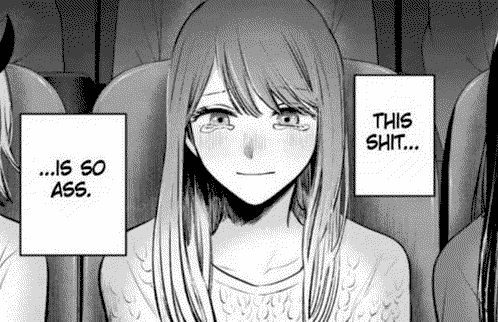
It’s 2026 and Stranger Things is bad. The years won’t ever stop coming. Let’s have a good one.
Bibliography
-
Shanfeld, Ethan. “‘Stranger Things’ Star Caleb McLaughlin Opens up about Racism from Fans: "It Definitely Took a Toll on Me".” Variety. ↩
-
Wu, May. “Why Stranger Things Is a Metaphor for Racism.” Medium. ↩
-
binarythis. “The Queer World of Stranger Things.” BINARYTHIS. ↩
-
A lot could be said about how the show handles Max and Jane’s relationship with one another in comparison to the male characters, as well as their journeys of gender expression and how they become intertwined with one another. Jane begins the show completely cut off from societal expectation and knowledge of social norms. She lacks all obvious gender markers, prepubescent and with a shaved head, to the point where she is mistaken for a boy by multiple witnesses; as mentioned, her first venture into overt feminine expression is in the context of disguising herself, and after her confrontation with the boys’ main bully, she loses the blonde wig but keeps the dress. In season 2 her hair has grown out, and as she strives for her own independence she experiments with finding her own sense of expression, getting a punk makeover by her sister Kali in episode 7, “The Lost Sister”. Jane rarely gets the opportunity to directly interface with other female characters who aren’t related to her in some way, i.e. her sister and mother; most of her arcs surround at least one male figure in a high capacity, whether as a father figure (Hopper, Dr. Brenner) or as a love interest (Mike).
Max is introduced in season 2 as the mysterious new kid beating the boys’ scores at the arcade— Mad Max— and becomes their immediate subject of fascination and infatuation, but she rebuffs them until she’s gotten truly endeared to the group. She is solitary, independent, and foul-mouthed; she consistently sports an androgynous clothing style and dresses up as Michael Myers for Halloween (scaring the shit out of the boys in the process); while searching the school for a larval Demogorgon, she enters the boys’ locker room without a second thought; she is shown nearly exclusively playing video games and skateboarding, often outperforming her male peers. She carries an immense amount of pain and terror from her home life, with her resentful stepbrother Billy acting as her only present guardian, and largely keeps it to herself under a tough, aloof guise for fear that his interference will cause harm to those she gets close to. Her relationships with the other male characters are also nearly exclusively defined by romantic overtures, with Dustin and Lucas attempting to compete for her heart throughout the entirety of season 2.
At first, Jane and Max are juxtaposed in yet another love triangle, this time between themselves and Mike despite the fact that Mike is actively hostile towards Max’s presence. By the time season 3 rolls around, Max and Lucas / Jane and Mike have gotten together respectively. Jane and Max, without any narrative push to see each other as rivals, instead become co-conspirators— girl friends, if you will. Max becomes Jane’s confidant about her and Mike’s strained relationship, her main emotional support and source of advice. They have the aforementioned sequence in episode 3 (“Mall Rats”) where they undergo a shopping spree set to Madonna’s “Material Girl”; a gross expression of unbridled consumerist excess for sure, but also one of the only times in the show where two unrelated girls of the same age openly laugh, smile, and hold each other. Max embraces Jane as their photos taken in couple-like poses, laughing in the face of the snobbish girls who look at them strangely, and Jane uses her powers to make the latter’s smoothies harmlessly explode— one of the only times she uses her powers not only for her own amusement, but to make Max laugh. (Compare to Elfen Lied’s Lucy and Aiko Takada, two girls with tormented relationships with their father figures and hold a trauma-bonded, homoerotically charged dynamic with each other, who have a scene in a shopping mall where the former uses her usually-deadly powers to entertain the latter. This is a parallel the show certainly did not intentionally draw, but holds interesting similarities regardless.) ↩
-
Forlini, Emily. “Netflix Is Telling Writers to Dumb Down Shows Since Viewers Are On Their Phones.” PCMAG. ↩
-
Walters, Meg. “Why the 2016 Trend Is Hitting Millennials so Hard.” Glamour. ↩
-
Sedikides, Constantine, et al. “Nostalgia: Past, Present, and Future.” Current Directions in Psychological Science, vol. 17, no. 5, 2008, pp. 304–07. ↩
-
Wilson, Janelle Lynn. “Here and Now, There and Then: Nostalgia as a Time and Space Phenomenon.” Symbolic Interaction, vol. 38, no. 4, 2015, pp. 478–92. ↩
-
Routledge, Clay. “Historical Nostalgia in Modern America: Exploring Its Prevalence, Appeal, and Psychological Utility.” Archbridge Institute. ↩
-
Tangcay, Jazz. “How "Stranger Things" Landed Kate Bush’s “Running up That Hill.”” Variety. ↩
-
Marable, Manning. “Social and Economic Issues of the 1980s and 1990s.” Amistad Digital Resource. ↩
-
Orazi, Davide Christian, and Tom van Laer. “It’s Not Nostalgia. Stranger Things Is Fuelling a Pseudo-Nostalgia of the 1980s.” The Conversation. ↩
-
Institution, Smithsonian. “Button, Ronald Reagan, 1980,” Smithsonian Institution. ↩
-
Stoddard, Jeremy D., and Alan S. Marcus. “More than "Showing What Happened": Exploring the Potential of Teaching History with Film.” The High School Journal, vol. 93, no. 2, 2010, pp. 83–90. ↩
-
Dubrofsky, Rachel E. “Jewishness, Whiteness, and Blackness On Glee: Singing to the Tune of Postracism.” Communication, Culture & Critique, vol. 6, no. 1, 19 Feb. 2013, pp. 82–102. ↩